Enzymatic nanomotors carrying a DNA cargo
 Photo by rawpixel on Unsplash
A physical theory of the biological world requires that we quantitavely understand Active matter. These are systems that are maintained out-of-equilibrium and are capable of sustained motion, while they consume energy from their environment.
Molecular motors (kinesin, myosin, etc.) are examples of active matter at the nanoscale that convert ATP into mechanical energy in an environment dominated by thermal fluctuations and viscous forces. What are the physical constraints we have to overcome to manufacture devices of comparable complexity? . From first principles, we make use of simple building blocks, such as nanoparticles, enzymes and nucleic acids in order to self-assemble nanodevices capable of mimicking molecular motors, the workhorses of cells. With the tools of DNA nanotechnology we can self-assemble nanostructures from bottom-up (DNA Origami) and functionalise site-specifically these nanostructures with nanomotors. We use catalytic nanoparticles, as well as enzymes to help reach propulsion that goes beyond diffusion.
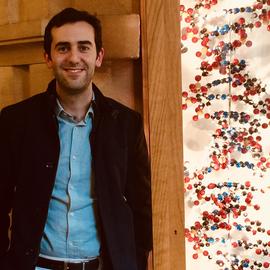
Ibon Santiago
Alexander von Humboldt Research Fellow, PhD
I am a physicist working in recreating biological phenomena in synthetic systems. My research interests include active matter, artificial cells and the wonders of biological physics.