Silver nanoparticle synthesis by hemoglobin modified electrodes

We report a novel electrochemical approach for synthesising colloidal silver in aqueous phase by means of a haemoglobin-modified boron-doped diamond electrode. The resulting Ag nanoparticles are within 10 nm size and highly monodisperse with minimal electrode deposition. We also introduce a method for measuring the yield of synthesised nanoparticles using square-wave voltammetry as an alternative to UV-vis spectroscopy. More than 50% of transferred electrons contributed directly to the formation of silver nanoparticles. This high yield indicates that such electrochemical synthesis is an efficient one-pot method for producing colloidal silver free of toxic reagents and offers a path toward green metal nanoparticle synthesis in solution. A comparative study using alternative electrodes, modifiers and surfactants suggests a mechanism for the formation of silver nanoparticles mediated by haemoglobin-modified boron-doped diamond.
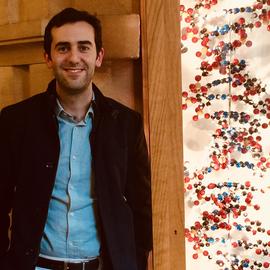
Ibon Santiago
Alexander von Humboldt Research Fellow, PhD
I am a physicist working in recreating biological phenomena in synthetic systems. My research interests include active matter, artificial cells and the wonders of biological physics.